
Theophrastus and Early Botanical Knowledge
The Theophrastus Research Series treats Enquiry into Plants as a foundational work of descriptive botany in the ancient world. We read it as a practical system of plant knowledge—built from observation, comparison, and everyday experience—and explain how its descriptions and groupings shaped later ways of thinking about plants.
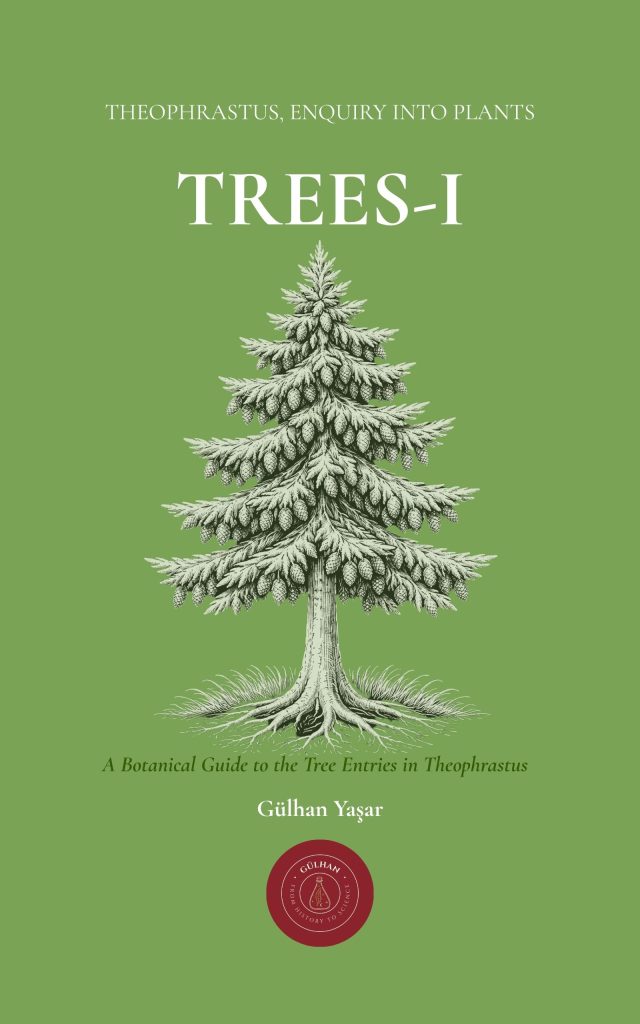
Following the text’s structure, each volume clarifies Theophrastus’ method and organizes every plant mentioned under the primary headings trees, shrubs, undershrubs, and herbs, presented in a consistent format. A companion visual atlas of schematic diagrams supports navigation and makes the categories visible at a glance.
Explore the volumes below:
Avicenna’s Contributions
This Research Series explores Avicenna’s contributions to natural knowledge by reading plants and life within the wider architecture of his philosophy. We begin with a clear, accessible guide to the full scope and structure of al-Shifāʾ, outlining what each major section aims to do and how the work holds together as a system. From there, we focus on Avicenna’s natural philosophy through key concepts such as motion, time, and place, showing how these ideas shape his understanding of physical change and living beings.
The second half of the series turns to Avicenna’s botanical writings more directly, with a detailed study of the al-Nabāt section—an important text that does not yet have a widely used modern English translation. To support readability, we clarify difficult points in the botanical discussion (for example, topics such as branch formation and flower structure) by relating Avicenna’s terminology to modern reference knowledge while staying faithful to the original conceptual context. Finally, we prepare a print-ready edition of the research, with academic references and a full bibliography, so the work can be used both as an introduction and as a citable resource.